
The moment my front door burst open, suddenly everything I knew about safety, family, and control was shattered. I was just fifteen. Moments earlier, I’d been chatting with my best friend on AIM messenger, trying to make sense of my pain. I admitted I wanted to end my life with my stepdad’s firearm, escalating from the self-harm that I had been doing to cope as that wasn’t a permanent solution to what seemed like a permanent problem.
I didn’t know she had called the police.
When the officers arrived, the world flipped upside down—literally. They said they had to search for a weapon, but what they found instead unraveled my entire life. My stepdad was arrested for and later incarcerated for criminal activity uncovered in their search.
The officers didn’t take me to a hospital. They put me in handcuffs and took me to the police department. I sat alone in a cold, dark room for hours, terrified, confused, and numb. No one told me what was happening. Eventually, I was handcuffed again and transported to a psychiatric hospital that had an adolescent unit. That night was just the beginning of being trapped in a revolving door with psychiatric hospitals.
When I arrived at the hospital, I thought maybe things would finally make sense. I thought I would get help, safety, or at least a kind voice to explain what was happening. Instead, I was questioned, analyzed, and told that my memories were wrong. They insisted that my stepdad — the man who’d been arrested that night — was the one who had sexually abused me for years. He hadn’t. The truth was far more complicated, and far more painful. I had been abused, but the abuse had come from someone else — a neighbor, a family ‘friend’ I’d known my whole life. It had gone on for six years until he passed. But no one wanted to hear that version. It didn’t fit the story they wanted to tell.

Child Protective Services investigated my mother for the emotional and physical abuse and neglect that had defined my childhood. She fought against my treatment, refused the medications I was prescribed, and continued to hurt me at home.
The first foster home didn’t last long. After another severe self-harm incident, I was moved to a group home — a big house with twenty-one beds for girls in the system. No foster parents. Just staff. Rules. Surveillance. Another facility. Another form of psychiatric incarceration. I stayed six months, cycling in and out of adolescent hospitals for continued self-harm and suicidal thoughts.
When that wasn’t enough containment, I was sent to a “high-level” group home — a locked ward for youth considered too “troublesome” for regular placements. I was there for seven months. I was restrained, forcibly injected, and emotionally broken down until survival meant one thing: fawning. I learned to say what they wanted to hear, to suppress the truth, to appear “better” so I could get my freedom back.
By seventeen, I was sent home. My mother had completed her classes, passed her evaluations, and convinced everyone she’d changed. She hadn’t. The manipulation, control, and abuse were still there — just quieter, more strategic. I became an adult, and the hospitalizations continued.
Adulthood only made things worse. The wards were harsher, colder, and more chaotic. I was restrained for hours until I wet myself. Denied water. Injected for raising my voice. Beaten by nurses who saw me as a problem to be fixed, not a person to be helped. I was silenced again and again in many ways. My honesty was seen as danger, not pain. My openness as instability, not truth.
Since that first night at fifteen, I have never gone more than six months without being hospitalized. My insurance once told a doctor I’d been admitted over seventy times. The doctor told me that in disbelief. I felt shame. But I share it now because it shows how easily people can get trapped in this system — how it claims to heal but only harms. If it worked, I wouldn’t have been hospitalized seventy times. I wouldn’t have been traumatized in the name of care.
I’ve worked so hard to turn that pain into purpose. I’ve earned various mental health care certifications, worked in crisis response, supported others, and built a career in mental health advocacy. But here’s the truth: if I were admitted to a psych ward today, none of that would matter. The moment I spoke up for my rights, I’d be seen as delusional, combative, “noncompliant.” And just like that, I’d be tied down and injected again.
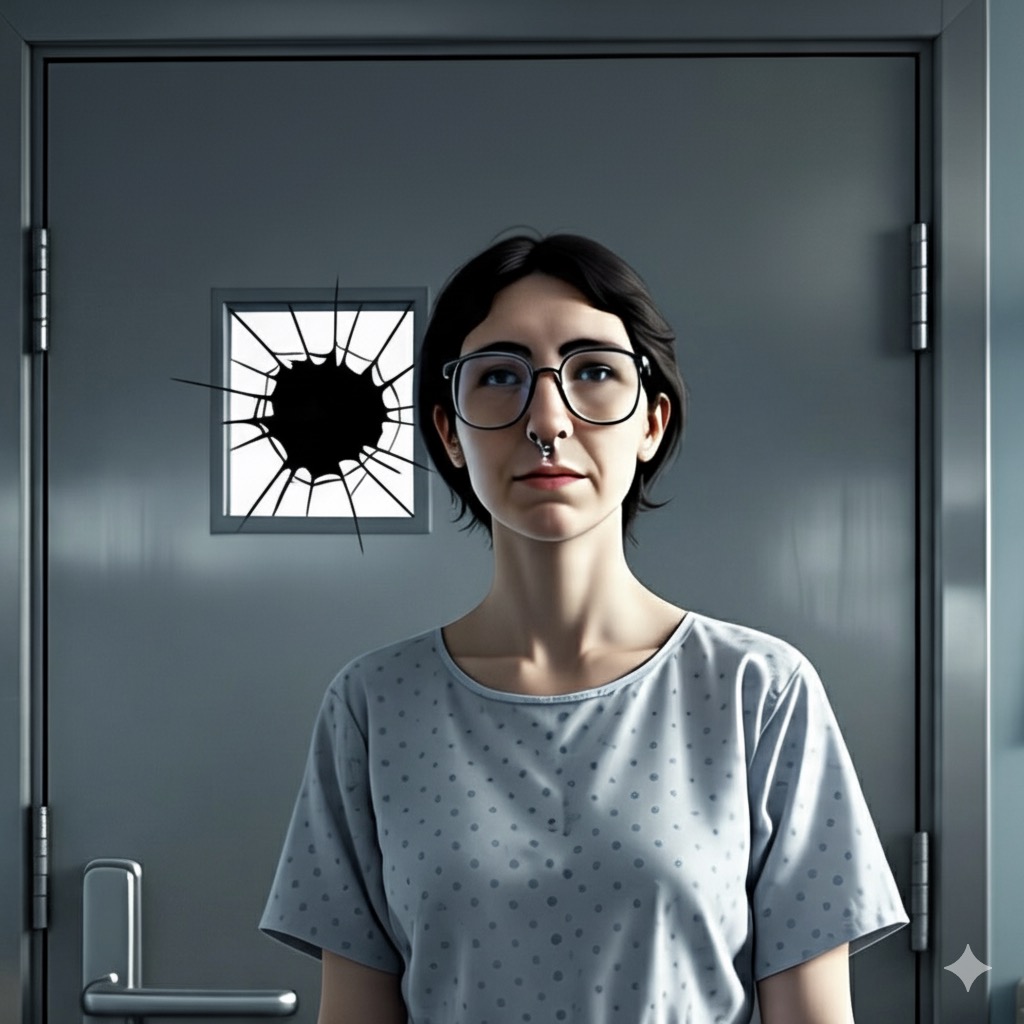
That’s the reality. That’s what I know — because I’ve lived it, over and over.
We deserve better. We deserve care that heals, not control that harms.
We deserve freedom.
Let’s unlock the psych ward doors.
— Cristine (Founder of Unlock Psych)
